End-of-Year Financial Checklist for a Prosperous 2025
About the Guest(s):
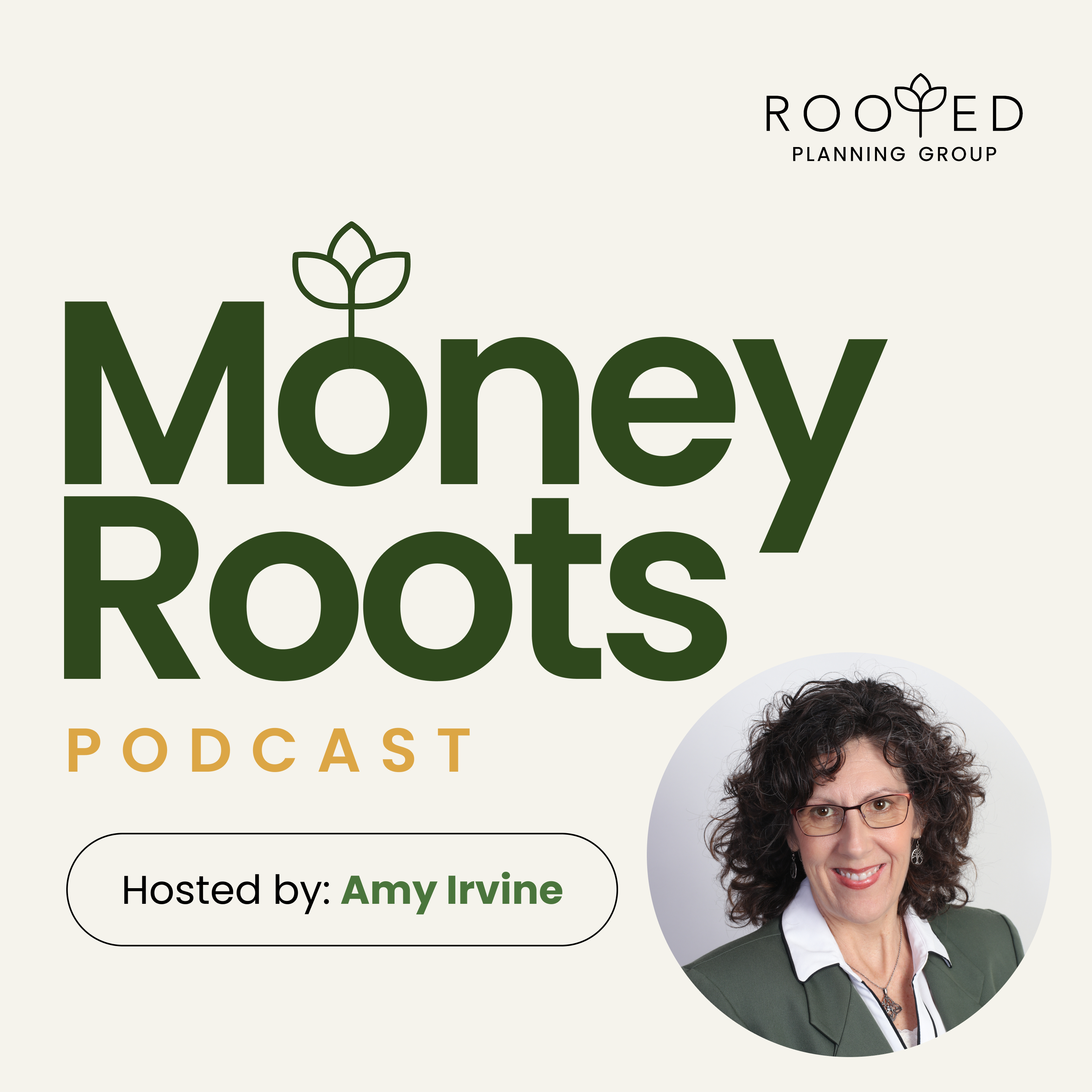
The episode is hosted by Amy Irvine, a financial expert and part of the Money Roots podcast team. Amy Irvine, along with her team, is dedicated to making financial conversations real, relatable, and oriented around personal goals. Although the transcript doesn't detail Amy's professional history, her knowledge and expertise in financial planning and investment strategies are evident throughout the episode. Her commitment to helping listeners understand and manage their finances optimally is demonstrated through her thoughtful advice and insights.
Episode Summary:
In this insightful episode of the Money Roots podcast, host Amy Irvine walks listeners through essential financial actions to consider before the end of 2025. As the year draws to a close, the episode aims to equip the audience with practical advice to optimize their financial standing and prepare for future growth. Amy covers a breadth of topics, including asset management, tax planning, retirement contributions, and charitable donations, offering a wealth of information to guide listeners through pivotal year-end financial decisions.
Throughout the episode, Amy emphasizes the importance of strategically managing assets and debt. She discusses the potential benefits of realizing capital losses to offset gains and highlights how certain mutual funds could impact tax obligations. Capital gain distributions and estimated tax payments are also discussed, providing listeners with key insights on minimizing year-end tax liabilities. Moreover, the host delves into retirement planning strategies, advising on required minimum distributions (RMDs), conversions between traditional and Roth IRAs, and intra-plan conversions within 401(k) plans. Her recommendations aim to maximize retirement savings while minimizing potential tax burdens.
Key Takeaways:
- Realize capital losses to offset gains and consider potential capital gain distributions in taxable accounts.
- Meet required minimum distributions (RMDs) for both personal and inherited IRAs before year-end to avoid penalties.
- Evaluate opportunities for Roth conversions and strategic retirement contributions while considering future income levels.
- Engage in tax planning by capitalizing on qualified charitable donations and understanding adjustments such as IRMAA.
- Explore financial planning for education through 529 plans and business strategies like the QBI deduction.
Notable Quotes:
- "You can even write off up to $3,000 of ordinary interest if you have a capital loss totaling of 17,000."
- "Make sure that you take that RMD before the end of the year. RMDs from multiple IRAs can generally be aggregated."
- "If you are over 70 and a half, you can make what's called a qualified charitable donation from your retirement IRA account."
- "Using those qualified charitable distributions can be a big help to reduce that adjusted gross income."
- "Consider the financial aid planning strategies such as reducing income in specific years to increase financial aid packages."
Resources:
What Issues Should I Consider Before The End of 2025 Checklist
We encourage your continued engagement with Money Roots by tuning into the full episode to benefit from Amy Irvine's expert financial guidance. Stay connected for more insightful episodes to keep your finances grounded and your future growing.
Transcript
Foreign.
Speaker A:This is Money Roots, the podcast where Amy Irvine and her team keep Money Conversations real, relatable and rooted in your goals.
Speaker A:Let's grow together.
Speaker A:Hello Money Root listeners.
Speaker A: dcast recording at the end of: Speaker A:We have had such a ferv privilege of delivering information to you over the last year and years, I should say we will be starting a new podcast.
Speaker A:Well, starting a new podcast.
Speaker A: ing new podcasts leading into: Speaker A:We'd love to hear what things are most important to you.
Speaker A:What do you want to hear more about on this podcast?
Speaker A:Send us a note and we'll try to get some information out there that you would enjoy learning more about.
Speaker A:Like I said, today we're going to be talking about some issues you should consider before the end of the year.
Speaker A:We're going to have a handy, dandy little checklist that goes along with this, so no need to write all this stuff down.
Speaker A:Just go to the Show Notes and grab the checklist that we put together.
Speaker A:Let's start with assets and debt issues.
Speaker A:Perhaps you've got some positions in your portfolio that have had not so great of a year or years and so you might want to consider realizing those losses offset any gains.
Speaker A:Now you can even write off up to $3,000 of ordinary interest.
Speaker A:So if you have a capital loss totaling of 17,000, you'd only be able to use three.
Speaker A:But if you have a total loss of say 5,000 and you have some gains that are 2,000, you can use that additional 3,000 to write off say earned income or interest or anything like that.
Speaker A:And then if you have some mutual funds, you may want to check and see if there's any what's called capital gain distributions that hit your account this year.
Speaker A:Now this is only for taxable accounts like a brokerage account, that kind of thing.
Speaker A:Anything in an IRA or Roth ira.
Speaker A:This would not be applicable to if you have some large capital gains, which we have seen so far this year.
Speaker A:If you have some large capital gains, you may want to consider making a estimated tax payment so that you don't have an underpayment penalty when you file your income taxes before April 15th.
Speaker A:And if you are subject to those required minimum distribution rules and including those inherited IRAs, make sure that you take that RMD before the end of the year.
Speaker A:RMDs from multiple IRAs can generally be aggregated, but inherited IRAs can't be aggregated with a personal or traditional IRA.
Speaker A:And required minimum distributions from employer plans generally have to be taken separately with no aggregation allowed.
Speaker A:403s are the exceptions.
Speaker A:You can aggregate 403 plans, multiple 403 plans to take a required minimum distribution from one plan.
Speaker A:So you can designate that same with IRAs but 401ks employer sponsored plans you generally can have.
Speaker A:So that's some ideas behind assets and debt issues.
Speaker A:And we've talked even under here talked a little bit about tax planning issues.
Speaker A:Couple of other things that we want to talk about that I think is important.
Speaker A:You can wait until April 15th to make any retirement contributions like 401 I'm sorry Ira and Roth Ira.
Speaker A:But anything in our employer plan, typically unless you're self employed is, you know, something you have to do before the end of the year.
Speaker A:However, you may want to consider looking at some conversions before the end of the year.
Speaker A:And sometimes within your 401k plans they allow you to do some intra plan conversions.
Speaker A:So something that you might want to look look at just to see if that's an opportunity for you.
Speaker A:And if you're still working and your tax bracket is on the lower side and you're over 59 and a half, you may want to consider taking a distribution to move money from one source like a traditional IRA to a lower source like a Roth ira.
Speaker A:Just some things to think about.
Speaker A:And if you expect your income to decrease in the future, you may want to reduce your tax liability in your traditional IRAs and 401 contributions instead of a Roth.
Speaker A:If you have any already kind of mentioned some unrealized losses or gains and making them realized.
Speaker A:One thing I forgot to mention is if you have any carry forwards from prior years.
Speaker A:So meaning if this year you had some gains and some losses, but in prior years you had some bigger ones, again you may want to take some opportunity to use some of that carry forward.
Speaker A:This year we've, we've seen three years in that overall stock market have been pretty positive.
Speaker A: nt to utilize some of that in: Speaker A:Notice I said 70 and a half.
Speaker A:Not in RMD status because you don't have to be in RMD status, you just have to be over 70 and a half.
Speaker A:You can make what's called a qualified charitable donation from your retirement IR account and that is not included in income.
Speaker A:It is not a deductible donation but it's not included in income.
Speaker A:And where a lot of people do that is because they're trying to reduce their future RMDs so they make donations now.
Speaker A:And note that if you are an RMD status, you can use your RMD for this purpose.
Speaker A:Again, this helps you with overall income and reducing your taxable income because it doesn't actually get included in taxable income.
Speaker A:That can be a big help for those that are on Medicare that have slipped into what's called irmaa, which is an income modification amount that you have to pay above and beyond the normal amount of Medicare.
Speaker A:Using those qualified charitable distributions can be a big help to reduce that adjusted gross income or modified adjusted gross income that determines irmaa.
Speaker A:And note that next year if you do itemize your tax return and normal the charitable deductions are thrown in there next year there is sort of a step up that you have.
Speaker A:So you have to reduce the charitable contribution by 0.05% of your, excuse me, 0.5% of your of your adjusted gross income.
Speaker A:So making those charitable contributions, especially to donor advised funds may be very helpful this year you can stack up this year and then next year you might be able to take the $2,000 donation.
Speaker A:That's below the line.
Speaker A:Just depends on your situation.
Speaker A:If you've had any RSUs or anything like that, this is a good time of the year to run some projections just to make sure.
Speaker A:Because a lot of times they don't withhold enough for taxes.
Speaker A:When they do RSUs, they you often don't.
Speaker A:When I say they, the employer often doesn't allow you to pick what tax bracket these RSUs are going to throw you in.
Speaker A:So just something to think about and run some estimates on.
Speaker A:Some other thoughts that we have is if you are a business owner, some things that you might be eligible for and be thinking about is what's called a QBI or qualified business income deduction.
Speaker A:Are you eligible for that?
Speaker A:We can send you.
Speaker A:If you are somebody, we can send you a flowchart on that specifically.
Speaker A:And you may want to consider using a Roth versus a traditional retirement plan if you want.
Speaker A:If reducing your income actually takes you out of qbi.
Speaker A:So it's a strategy that we've used a few times with employers to make sure that they get more QBI is that they save in their Roth versus Traditional.
Speaker A:If you have business expenses, you know, take a look and see does it make sense to accelerate those expenses to reduce the overall tax liability this year?
Speaker A:Again, kind of have to do that before December 31st in order to make sure that it works.
Speaker A:And also many retirement plans have open must be open before the end of the year.
Speaker A:So you have to be thinking about that as well.
Speaker A:And another big one on the tax planning arena is if you have had a change in marital status.
Speaker A:This stings a lot of people because often it changes the withholding amount, the liability, I should say.
Speaker A:And people don't change their withholding amount.
Speaker A:And so that's something that again would be smart if you've had a change in marital status, to run a tax reduction just to make sure that you have enough being withheld.
Speaker A:If you're able to save a bit more, certainly you could bump up your HSA.
Speaker A: y be able to contribute up to: Speaker A:And if you're over the magic age of 55, you get to put an additional $1,000 in.
Speaker A: for: Speaker A:You actually can fund that up until April 15th.
Speaker A:But just be aware that that's something that is an option.
Speaker A:If you have an employer retirement plan such as a 401k, you may be able to save a little bit more, but you're kind of getting down to the wire on that one.
Speaker A:That has to be done before the end of the year.
Speaker A:The maximum salary deferral contribution to the employer plan is $23,500 plus any catch up contributions that would apply.
Speaker A:But again, you probably get down to the end of the year to be able to make direct contributions there.
Speaker A:And if you have somebody that would benefit from a 529 plan, consider contributing to that.
Speaker A:You can make an annual exclusion amount up to 19,000 per year to a beneficiary's 529.
Speaker A:That's all of course gift free.
Speaker A:Alternatively, you can make a lump sum contribution of up to 9,500 to the beneficiary's 529 account.
Speaker A:Elect to treat that as if the gift were over a five year period.
Speaker A:Now, some states have some deductibility, meaning you can take it off the state level if you save.
Speaker A:But not all states have that and the amounts vary from state to state.
Speaker A:And you may be able, yeah, you may be even able to transfer portions of unused 529 plans to a beneficiary's Roth IRAs.
Speaker A:So that's a whole nother topic that we could get into the nitty gritty on.
Speaker A:But that that's something that I used to be a little concerned about people making too much money to a 529.
Speaker A:I still have that concern, but I'm less concerned about that now because there is an alternative of what to do with any remaining money.
Speaker A:And for those of you that have what's called a flexible spending account, not a health savings account, by the way, but a flexible spending account, just a reminder, some companies allow a transfer of $660 of unused flexible savings account money to be rolled over to the next year.
Speaker A:And then some companies also offer a grace period of up to March 15th to spend the FSA money.
Speaker A:Many companies offer you 90 days to submit receipts from the previous year.
Speaker A:And if you have a dependent care FSA check the deadlines for unused funds as well.
Speaker A:Those are really important because remember, with flexible savings accounts, if you don't use it, you lose it.
Speaker A:Unlike a health savings account where it rolls from year to year.
Speaker A:And then for just thinking about things like estate planning, have there been any changes to your family, to your heirs?
Speaker A:Have you bought or sold any assets this year?
Speaker A:If so, just consider updating that or maybe reaching out to schedule an appointment with the attorney in January.
Speaker A:I would not recommend doing that by the end of this year, but just be thinking about that and maybe getting that checked off the list in early January.
Speaker A:However, if there are any gifts that you want to make, just a reminder, those gifts, the monetary gifts do need to be made.
Speaker A:If you want the total annual exclusion amount up to 19, that's per year per donee.
Speaker A:Those are tax free.
Speaker A:Those do have to be made by the end of the the year.
Speaker A:And for anybody that has children in high school or younger who plan to attend college, like I said, you know those if you're looking at like I would say sophomore to junior year, consider the financial aid planning strategies such as reducing income in specific years to increase financial aid packages.
Speaker A:Of course there's lots of planning around college in general, but that's just something that when people ask me should I do certain things like cash in stock options or cash in a deferred comp plan, sometimes we'll push that down the road just a little bit so that the income reflects in a different year.
Speaker A:I hope that I know that was a really quick overcap.
Speaker A: orward to different topics in: Speaker A:Thanks everyone.
Speaker A: e you have a wonderful end of: Speaker A:Thanks for listening to Money Roots.
Speaker A:Until next time, keep your finances grounded and your future growing.
Speaker A:Sam.