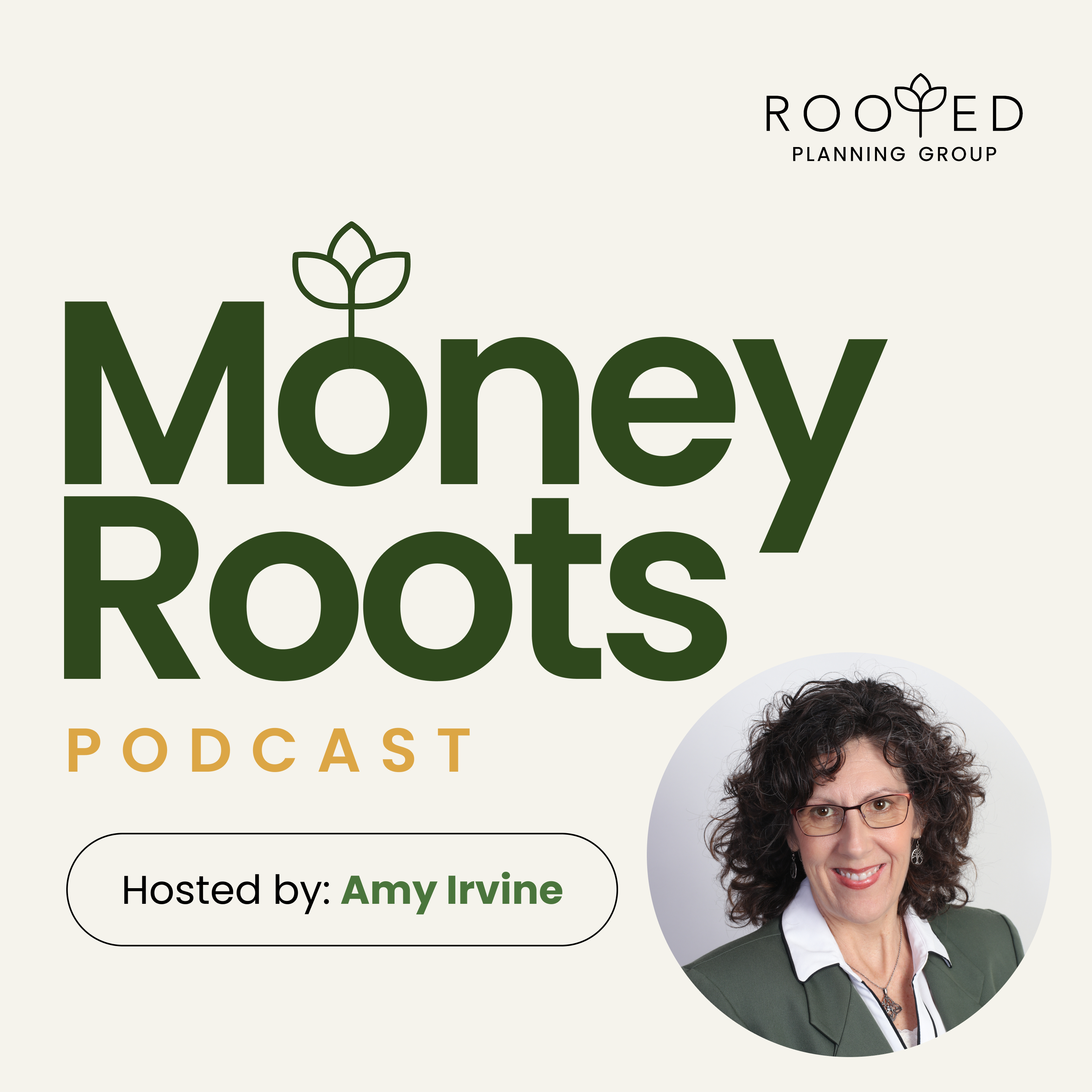
10 Lessons Learned from a Decade of Business Ownership
About the Guest(s):
Amy Irvine is the founder and CEO of Rooted Planning Group, a financial planning firm dedicated to providing personalized financial strategies. With over a decade of experience in the industry, Amy has established herself as a seasoned expert in financial planning. She founded the Money Roots podcast, where she shares insights and lessons learned throughout her journey as a business owner. Celebrating 10 years of her firm, Amy focuses on helping Generation X women and their families navigate financial education and planning.
Episode Summary:
Join Amy Irvine, founder of Rooted Planning Group, as she celebrates 10 years in business by sharing the top 10 lessons she's learned as an entrepreneur on this episode of Money Roots. This engaging podcast dives into the real conversations behind financial planning and emphasizes the importance of having clear goals and vision, both personally and professionally. Amy reflects on her journey, including the transformative events that led to the creation of her firm and the significance of working with her chosen clientele.
Amy's insight-rich discussion highlights the importance of branding and knowing your audience while balancing success planning and failure anticipation. She underscores the value of continuous growth, strategic retreat opportunities, and recognizing personal and business evolution over time. As she unravels the nuances of running a successful business, Amy offers invaluable advice to all listeners, from business owners to those contemplating entrepreneurship, such as planning for success while being mindful of "you should" advice from others.
Key Takeaways:
- Understanding Your "Why": Know your reasons for starting a business and ensure your work aligns with your life goals.
- Brand and Audience Clarity: Establish a clear brand and understand your target audience from the outset to prevent future challenges.
- Plan for Both Success and Failure: Set KPIs to prepare for success, not just anticipate failures.
- Prioritize Strategic Decisions: Learn to differentiate between opportunities to pursue and those to decline to maintain focus and energy.
- Evolve with Change: Embrace personal and professional growth, adapting your business as necessary along the way.
Notable Quotes:
- "If money wasn't a barrier, what would we change in our lives?"
- "Plan for success as much as you plan for failure."
- "Understand what opportunities are right for you and which ones are not."
- "Success is often measured by impact."
- "Solo and team retreats are fantastic opportunities."
Resources:
- Rooted Planning Group Website: Rooted Planning Group
Engage further by tuning in to the complete episode of Money Roots for more valuable insights from Amy Irvine. Stay connected for future episodes where we explore the intersection of life events and financial planning.
Transcript
Foreign Hi, I'm Amy Irvine, founder of.
Speaker B:Rooted Planning Group, and this is Money Roots, a podcast where my team and I explore the real conversations behind financial planning.
Speaker B:Because life is about events supported by your dollars and cents.
Speaker A:Let's get started.
Speaker A:Hello, Money Root listeners.
Speaker A:Amy Irvine, founder and CEO of Rooted Planning Group.
Speaker A:Celebrating 10 years of being in business at Rooted Planning Group.
Speaker A:So I thought I would share with you the top 10 things that I've learned from being a business owner.
Speaker A: st of: Speaker A: ter than that in September of: Speaker A:So we're going on just about nine years with the podcast as well.
Speaker A:And I thought that it would be a great opportunity to just talk about again, lessons that I've learned as being a business owner.
Speaker A:And if you're not a business owner, I still think you can listen to this podcast and take away some lessons that you could learn just being somebody who might be interested in starting a business or in your own job, or even potentially in your own life in other ways.
Speaker A:But one of the things that, when I look back on the start of this journey was the reason why I did it.
Speaker A: rybody knows my story, but in: Speaker A:One in particular was the, the passing of my uncle, who at the time was only about a year older than my husband.
Speaker A:And it just, it kind of opened up my eyes to, was I enjoying life the way that I should be enjoying it?
Speaker A:Like, if, if I were to pass away, you know, at that age, would I have, would I be able to look back and say I lived the way that I wanted to?
Speaker A:So that was a really big eye opening moment for me and really started making me question, do I like the work that I'm doing?
Speaker A:And the ultimate answer was, yes, I liked the work that I was doing, but I didn't necessarily like the where I was doing it.
Speaker A:I asked my husband on a walk one morning what one of the questions that I ask a lot of clients.
Speaker A:And if you've listened to this podcast for a long time, you've heard this question, but if money wasn't a barrier, what would we change in our lives?
Speaker A:And I always joke and say it's his fault that we sort of went on this journey a little bit, because he said, well, I wouldn't mind being where it was a little warmer in the winter months.
Speaker A:And of course, I do not like winter at all.
Speaker A:So it actually became a mission of mine to figure out how to do that.
Speaker A:If he was willing to be gone for a few months, I definitely was willing to be gone.
Speaker A:So how could we actually make that happen?
Speaker A:We started to explore some options along those lines to figure out how to make that work within our lives.
Speaker A:And we tried within the company that I was working for at that time, to explore options.
Speaker A:And there was an individual that reached out to me that was looking to change the design of their business, and they happened to be in Florida.
Speaker A: nd so initially we decided in: Speaker A:And we formed a partnership with that individual that lived in, well, had a business in Merritt Island, Florida, we rented in Cape Canaveral.
Speaker A:And we did that for probably, I think six to eight months was the total.
Speaker A:And we realized that that partnership was, well, you know, ideal that we thought really wasn't the direction that we wanted to go.
Speaker A:And we approached the individual and said, hey, we.
Speaker A:We think that it would probably be in our best interest to collaborate maybe, but not be in business with each other.
Speaker A:Which led me down the path of starting my own company.
Speaker A:Now, the interesting thing about some of that particular process was I had reasons as to why I named the company the way that I did, and I don't regret it.
Speaker A:But, you know, fast forward a few years, you'll hear, as part of the journey, I learned that, you know, probably if I could do something over again, that would be something I would do over again is the name of the business.
Speaker A:I wanted to work with people that were in my age range.
Speaker A:I understood some of the things that they were going through, and I.
Speaker A:There was unspoken language, I guess you want to say.
Speaker A:And so when I launched Rooted Planning Group, the actual name at that point in time was Irvine Wealth Planning Strategies, which is still the official name of the business.
Speaker A:It's just that Rooted Planning Group is a dba.
Speaker A:And one of the core things that I wanted to be focusing on was working with X gen women and their families to help provide education along finances and really make sure that people understood the recommendations that were being provided to them.
Speaker A:And they.
Speaker A:They hired me not because they felt like they didn't know what to do, but because they wanted a thought partner around their finances.
Speaker A:And so that was sort of the key focus.
Speaker A: n I launched the Firm Back in: Speaker A:Although with adding some younger generations, we've expanded that vision a bit more broadly.
Speaker A:One, one other thing that I, I didn't.
Speaker A:I can, you can always go back and say woulda, coulda, shoulda.
Speaker A:But one other thing that I feel took me some time to become really clear about was the brand.
Speaker A:When I launched the firm initially, I was the brand.
Speaker A:That's one of the reasons why I called it Irvine Wealth Planning Strategies was I needed to have people know that I was still in the area and that I had launched my own thing and they could find me by searching my name.
Speaker A:And so I was the brand.
Speaker A:As the company grew, I wasn't the brand anymore.
Speaker A:It became more about the team being the brand and us working collectively together as a team, helping clients in their levels of success and their journey.
Speaker A:And so shifting from shifting the brand was actually one of the biggest, and still a little bit continues to be one of the biggest challenges that we have.
Speaker A:If you can start a business with your brand being really clear, you can avoid some heartache along the way and some challenges along the way.
Speaker A:Now, I'm not saying that your brand doesn't change because I think that that's something that some people get very hooked on and they don't shift or pivot when they need to or find, find another passion that they really enjoy working on and they get beholden to what the original brand is.
Speaker A:But be clear on your brand.
Speaker A:If you're going to do a shift, make sure that people understand what that shift is on your brand.
Speaker A:Lesson number three is having a clear vision of who you want to serve.
Speaker A:Now that's something I think I did quite a quite well and I mentioned that, you know, knowing under lesson number one, under knowing your why but, but have a clear vision and who you want to serve.
Speaker A:Now your marketing, your branding, all of that kind of falls in line when you know who you actually want to serve.
Speaker A:Some people call it niche or niche.
Speaker A:I don't know that it needs to be as defined as some people have it, but I think having a clear vision of who you want to work with and who you want to serve does help with the direction you take the business and who you don't take on as clients potentially if you, if they don't fall within that group, there's nothing wrong with saying to somebody, I don't know Enough about that particular area.
Speaker A:I think you'd be better served with person X or group Y or something like that.
Speaker A:But, but having a clear vision of who you want to serve and in our journey, again, I think one of the things that started out when I first, first launched the partnership, I think one of the reasons why that partnership didn't actually end up being successful long term is that I had this drive to get out of the business that I was in previously.
Speaker A:The firm that I worked for previously was such a strong drive, but I didn't have.
Speaker A:Have a clear vision of who I actually wanted to serve.
Speaker A:I was more about, here's some skills that I have, here's how I can use those skills.
Speaker A:This other business needs those skills, so I, you know, I can help them.
Speaker A:What happened in the transition between the partnership and me starting my own business was that I became a lot more aware of the people that I wanted to serve and work with.
Speaker A:And that did help me figure out what I.
Speaker A:How I needed to market the business and who to work with.
Speaker A:So I think having that clear vision right from the get go would have been, again, very helpful to me.
Speaker A:I will say that it's narrowed a bit more over the years and become even more defined, and that's okay too.
Speaker A:But if you can have a pretty clear vision of who you want to serve right from the get go, I think that's very helpful.
Speaker A:It does often lead to slower business growth, but better business growth.
Speaker A:And again, sometimes when you grow too quickly, other challenges can come along with it, especially if it's not the people or the type of business that you want to work in.
Speaker A:I've seen lots of shifts within our practice because yes, my vision of who I wanted to work with was very clear, but I wasn't clear on parts of how I needed to charge for that or how I will admit that I wasn't sure or clear how to lay out the.
Speaker A:What our, what our service model really did look like and how to explain that.
Speaker A:I would have, in hindsight, again, would have spent a little more time figuring out the message to send.
Speaker A:I think I've been very clear about how we want to serve people to the maximum degree and who we want to serve.
Speaker A:But the, the pricing behind that took a number of years to actually come up with what we have at this stage of the game that I'm more comfortable with when people ask.
Speaker A:And so, so lesson number four kind of goes along with lesson number three.
Speaker A:But lesson number four is to plan for success as much as you plan for Failure.
Speaker A:This is something that when people ask me what is the one message I would share with them, this is the actual top message that I would share with them.
Speaker A:I was so worried about the business failing that I really did not do a great job of planning for what I didn't do.
Speaker A:I didn't plan for what if the business was actually successful.
Speaker A:And so I will say to people, set some KPIs to understand what you need to put in place and how to pivot on things like hiring and outsourcing and, and just making sure that you understand, like, if the business is successful, is there a point in time where you don't grow any further?
Speaker A:And one thing that I want to mention along with that is I've heard so many people say, well, if you're not growing, you're failing.
Speaker A:Growth is a relative term that you need to define.
Speaker A:Because I will say if you decide that your business can grow to a certain level and you need to start at that level, either saying no or outsourcing, that is okay, you can still grow in as a person, you can grow with service levels.
Speaker A:Be careful with that word, growth, and define what growth means to you, not what it means to other people.
Speaker A:And have those KPIs in place to say, if this happens, here's what I'm going to do so you can plan for your success.
Speaker A:This is an area that, again, I will say, has been a struggle for me because better now, I'm much better at it now than I was when I first started out the business.
Speaker A:I have a bigger vision of what the business needs, but I was so concerned about failure that I. I did not set aside time to actually plan for success.
Speaker A:So that's lesson number four is plan for success.
Speaker A:And this could be true in your career, it could be true in your retirement journey, it could be true for a trip that you're going on, but just make sure that you plan for that success as well as for failure.
Speaker A:Lesson number five is to continue to grow your knowledge and experience, but know what you can keep in house and what to outsource.
Speaker A:So there are things that I've learned that I can do that I don't enjoy doing.
Speaker A:And those kinds of things really should be outsourced or delegated.
Speaker A:And I think it's important to always, always continue to grow your knowledge and experience.
Speaker A:Go to conferences, take online classes, talk to your peers, figure out areas where you don't want to be the expert in, but you know enough to work with other experts in that particular area.
Speaker A:Make sure and if there's areas that you don't feel suited for, you should still grow your knowledge in those areas.
Speaker A:But that doesn't mean that you have to do those particular levels of service.
Speaker A:So just continue to grow your knowledge and experience, but know what you can and should keep in house and what you can and should outsource.
Speaker A:I think that's a big one.
Speaker A:And there's only so many resources.
Speaker A:And, and by resources, I mean time, energy, effort, size of the team, all of that that can be offered.
Speaker A:So just maybe understand your own limitations and work on making those connections for where you need to look and seek additional knowledge and for different additional partnerships.
Speaker A:Lesson number six is to understand that you're going to change over time, both you as a person and the business.
Speaker A:And it's okay.
Speaker A:Like, you know, sometimes I've seen, I would say this is one area that we've actually thrived in, is that we've been very good at pivoting as we've changed.
Speaker A:But I think that what I've seen for other businesses is they get so stuck in what they think their business was, or they look at their business and say, I was set up to do this.
Speaker A:And they won't pivot or change because of changing times.
Speaker A:And a great example of this is certainly as technology changes, your business may need to change.
Speaker A:You may need to implement certain technological advances within your practice or within your business that will enhance but not replace what you do.
Speaker A:And I want to stress that last part.
Speaker A:Enhance but not replace what you do.
Speaker A:But just understand that over time, things are going to change.
Speaker A:And if, and this, this almost goes along with, you know, one of those comments that I made before.
Speaker A:If you're not growing, you're.
Speaker A:You're dying and therefore failing.
Speaker A:Just understand that this could be an area of growth, that shifting your business, changing your business, little modifications here and there, will likely make your business more successful in the long run and probably you as a person happier.
Speaker A:And this is true again, with your career, with any journey that you go on.
Speaker A:I think it's important to know that, you know, we're all changing as people.
Speaker A:We're learning, we're developing, we're growing, hopefully as humans.
Speaker A:And that may shift things in your life a little bit as well.
Speaker A:Lesson number seven, and this is a big one for me, solo and team retreats are fantastic opportunities.
Speaker A:Make sure you do them.
Speaker A:Make sure you implement them in your life.
Speaker A:In my opinion, again, this may not be one that's for you, but it's certainly one for me.
Speaker A:I find that that time to brainstorm, whether it's me by myself doing some soul searching or some idea charting as well as time with the team to talk through various things that are going on with the business is just such a fantastic opportunity.
Speaker A:We do annual retreats with the team and I try to set some time aside at least once a year.
Speaker A:I have been doing this for several years where I do a little solo retreat too.
Speaker A:The opportunity to turn off devices and turn off what's going on around us for just a couple of days gives your brain a little bit of space to look at the big picture and not be in the business, but outside the business and look at what's working, what's not working, what feels hard, what feels easy, where you feel resistance.
Speaker A:All of those questions that you can ask yourself and the team, I think is really important.
Speaker A:And this is one of the areas that again, I think we've actually done really well.
Speaker A:It always leads to enhancing the, the workflows that we have, hopefully always enhancing the service to clients.
Speaker A:I mean, I think some of the best ideas have not been my ideas, they've been ideas that have come from the team and, or clients.
Speaker A:And so having that opportunity to talk through it, implement it with the practice and really just focus on some of that, I think again, it was where some of the best changes in our firm have actually happened.
Speaker A:Lesson number eight is to understand what opportunities are right for you and which ones are not.
Speaker A:Saying yes to everything can dilute your focus.
Speaker A:Strategic nos often creates space for the best opportunities, in my opinion, and this is something that I have learned the hard way over the last 10 years.
Speaker A:I think the last three, I've gotten much better at it in the last year.
Speaker A:Even better.
Speaker A:But when you say yes to everything, in my experience, it tends to really eat up your energy.
Speaker A:And so figuring out what yes you're going to say to and what nos you're going to say to are important.
Speaker A:And for the ones that are the no's, I often will take time before I say no to try to find a possible solution for that no.
Speaker A:For example, if you say no to a new client or a new business opportunity, it might be better suited for somebody else.
Speaker A:Then if you're responding to somebody, you can say, I gave some thought, I don't have capacity, or I don't have the bandwidth, or I don't have the knowledge.
Speaker A:I think that you're going to need.
Speaker A:Here's somebody or some business that might.
Speaker A:It really does remove some of the resistance from the person asking because you're giving them a solution as a result.
Speaker A:And so I don't find myself as I have as much anxiety saying no when I've actually come up with a, you know, done the direction for the person.
Speaker A:But just knowing what is a good yes and what would be a strategic no is very helpful.
Speaker A:And again, I think if I had thought about that right from the get go, then some of the avenues and lessons I've learned probably would not have been lessons I learned because I, I wouldn't have gone down some of the routes that I have.
Speaker A:And, and I just again think that that's something that if you can have your clear vision and then know what you're going to say yes to and what you're going to say no to is very helpful.
Speaker A:Lesson number nine would be watch out for the you should do this, you should do that.
Speaker A:That is going to come your way.
Speaker A:And it came my way in droves.
Speaker A:I'm not saying ignore them, but sometimes they show up with fingers pointing at you.
Speaker A:You should do this, you should do that, you shouldn't do this, you shouldn't do that.
Speaker A:Which in reality is the message that might be meant for the person delivering the message, not necessarily for you.
Speaker A:I will.
Speaker A:For me personally, one of the biggest shoulds or shouldn't, you know, I guess it was more shoulds was around the marketing component of the business.
Speaker A:I had so many people telling me, you should do this, you should do that, you should do podcasts, you should do blogs, you should do webinars, you should do seminars, you should do all of this stuff.
Speaker A:And what I learned was that there were two it was actually giving mixed messages.
Speaker A:There were too many things being thrown at people.
Speaker A:I was doing newsletters, I was doing webinars, I was doing seminars, I was doing podcasts, I was doing blogs.
Speaker A:It was so much information that was being pushed out there that it was information overload.
Speaker A:And once I peeled that back a little bit and got more clear about the message that I wanted to send and how I was going to send it, it was almost like a calmer presence that happened with the message that I was giving and pushing out into the world.
Speaker A:Even the social media component of, of it.
Speaker A:I had tons of social media that was going out there, but the traction was very limited.
Speaker A:And once I figured out that my path for social media really needed to be more the LinkedIn perspective, I could focus on the message that was going out there a bit more.
Speaker A:That's my, that's just one example of the shoulds.
Speaker A:Should, shoulds, even Some of the pricing that I had initially in place was I should like, you should do this, you should do that.
Speaker A:Once I figured out what, what would work for our practice versus what people were telling us we should do, again, very clear message, very easy to deliver.
Speaker A:We, we were able to explain it better because we weren't doing what other people told us we should be doing.
Speaker A:So just watch out.
Speaker A:I'm not.
Speaker A:Again, I'm not saying ignore, ignore what people are saying to you, but I'm saying be careful of those things.
Speaker A:When people are saying, well, you shouldn't be doing that or you should be doing this, just be, be real careful of that.
Speaker A:And then lesson number 10 is success, often for a lot of people, is in numbers.
Speaker A:Revenue.
Speaker A:I'm not saying that that's not a part of a successful business.
Speaker A:100% It is.
Speaker A:You have to have grow, you have to have revenue for a business to continue to operate.
Speaker A:And you have to have good cash flow.
Speaker A:But for many people, success might be measured.
Speaker A:And for me, this is true.
Speaker A:Success is measured by impact.
Speaker A:And again, what I said is revenue and cash flow is very important, but the true legacy of the business is really important to me and it makes a difference in my experience and the lives of the team, the clients and the community.
Speaker A:So thinking about all the way back to lesson number one, know your whys, think about your definition of success versus another one of what the what whatever business you're in says you should be doing for revenue levels, cash flow levels.
Speaker A:You don't have to have the same levels for of net profit of cash flow.
Speaker A:You have to have enough for you to be comfortable in life.
Speaker A:Probably, yes.
Speaker A:But it doesn't mean that your peers are the driving factor.
Speaker A:It matters that there's impact for most people.
Speaker A:And so what does that impact look like?
Speaker A:And if you can define what is impact to you and build that into the overall structure of your business, of your work life, of your personal life.
Speaker A:In my experience, there's much more happiness that comes to you.
Speaker A:And you know the impact that you have on your family and on your community and on your team is going to be much greater.
Speaker A:I hope that you've enjoyed this podcast and my 10 lessons that I've learned over time in being a business owner.
Speaker A:And I hope that you share this and with family members, with friends, and I would love to hear any other questions that you have about my journey and about the overall things that are going on in your life, whether it's financial or ultimately tied to the finance side of things.
Speaker A:But again, hope you enjoyed this podcast.
Speaker A:Thank you for listening and I would love it if you would share it and if you provide feedback.
Speaker A:Thanks everyone.
Speaker B:That's it for today's episode of Money Roots.
Speaker B:I'm Amy Irvine from Rooted Planning Group.
Speaker B:If you found this conversation helpful, we'd love for you to share the podcast with a friend, family member, or colleague who might enjoy it too.
Speaker B:And if there's a financial question on your mind, send it in.
Speaker B:Your question could be the topic of a future episode, because at the end of day, the the day life is about events supported by your dollars and cents.
Speaker B:Thanks for listening and we'll see you next time on Money Roots.